Journey to the Great Below,
Baltic Contemporary,
4 July 2026 – 17 January 2027
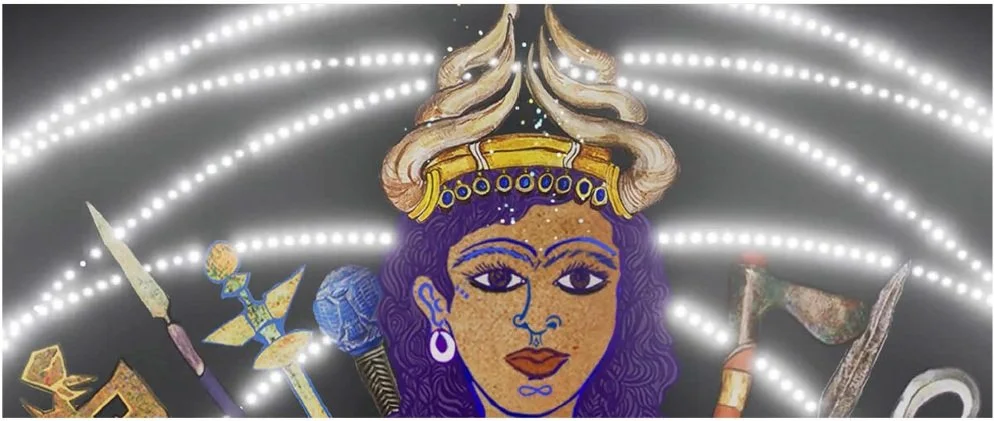
For this exhibition at Baltic, Ganesh has premiered a new large-scale animation titled Journey to the Great Below, inspired by what is widely considered to be the world’s oldest recorded myth, The Descent of Inanna into the Underworld. Written c. 1900–1600 BCE in Mesopotamia (modern-day Iraq), the story follows Inanna, the Sumerian Goddess of love, fecundity, and war, also known as the ‘Queen of Heaven’, on her treacherous journey to face her sister (and darker half) Ereshkigal, the ‘Queen of the Underworld’. The poem describes Inanna’s confrontation with death and her eventual return to the world of the living.
In Journey to the Great Below, history, myth, and contemporary life converge. Vibrant scenes interweave three-dimensional speculative mapping with archaeological materials and artefacts, infusing Mesopotamia and Indus Valley cosmologies with the language of futurism. Inanna’s tumultuous journey into the underworld resonates deeply with the current moment marked by political and ecological upheaval. Her shattered and renewed life is a potent metaphor for navigating our increasingly dark times with resilience and courage, offering a message of hope for our contemporary situation.
A new body of related sculptures, commissioned by Baltic, create a three-dimensional staging of The Descent of Inanna in real space and time. Fragmented architectural forms evoke the ‘Great Below’, inviting us to experience a world imagined thousands of years ago. Large-scale sculptures inspired by Inanna’s passage through the underworld – including an oversized eye (symbolising piety, devotion, fear, and destruction in Mesopotamian culture), and a descending staircase – draw upon artefacts held in the collections of The British Museum in London and The Metropolitan Museum of Art in New York. A site-specific wall drawing with collaged elements, also commissioned especially for the exhibition, features vignettes from the poem.
As the story unfolds across the gallery space, mixed media works from Ganesh’s studio, including Open Expectations of the Unknown Event and Untitled (Staircase) (both 2021), and the paintings Tree of Life and Breathing Water and Air (both 2024) explore recurring ideas such as bodily transformation and states of becoming. Heads and bodies have turned into animals, trees, and flowers, creating hybrid beings. The sculpture Manuscript (2018) constructed from aluminium and raw silk, replicates the artist’s hand magnified twelvefold. Informed by Ganesh’s embodied experience of monumental statuary in India, the hand’s otherworldly scale, combined with futuristic animated scenes mapped onto its surface, immerses us in the imaginary.
Reviews/Press: Frieze, Aesthetica, Studio International, Art Asia Pacific, Hyperallergic, Killscreen

Enheduanna’s Gate, 2026 Ganesh’s gate-like structure and decorative motifs draw their inspiration from the myth The Descent of Inanna into the Underworld and the life of Enheduanna, a Sumerian high priestess and poet and the earliest-named author in world literature. Enheduanna composed a collection of hymns and poems dedicated to Inanna. The sculptural form is based on one half of the Disk of Enheduanna, an artefact dating from c. 2300 BCE, which now resides in the Penn Museum, Philadelphia. Ganesh has used materials that evoke the feel of Lapis lazuli, a precious material in Sumerian culture. We are invited to pass through the centre of the structure, and through the Votive Figure in front, as Inanna journeyed through the seven gates on her perilous quest to meet her sister, Ereshkigal.
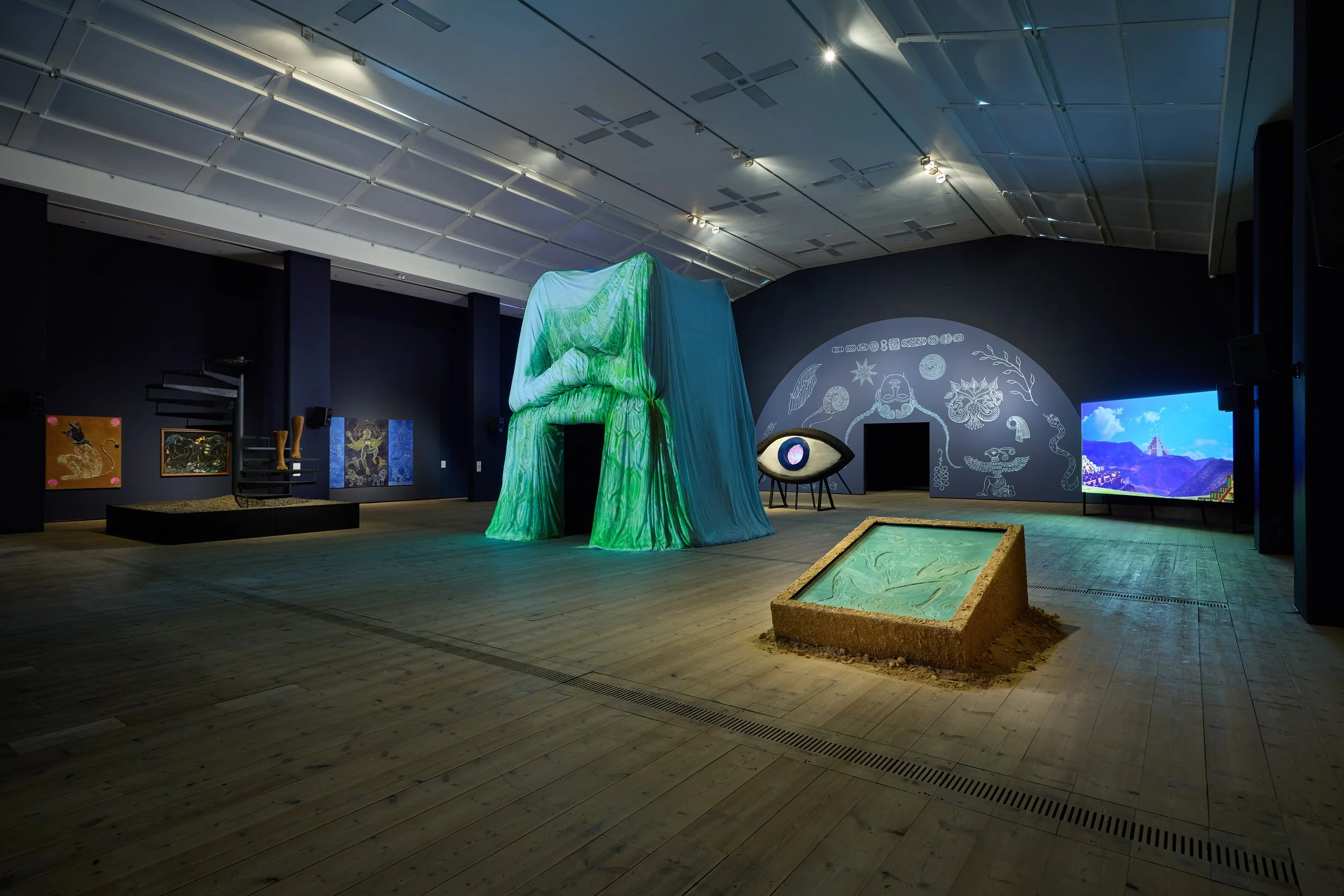
Votive Figure, 2026 Votive statues were objects of devotion commonly used in rituals in ancient cultures and offered to a god and goddess at a sacred place, such as a temple. Ganesh’s totemic sculpture is based on a female figurine of a Sumerian worshipper from the Temple of Inanna in the ancient Sumerian city of Nippur (c. 2700– 2500 BCE), an artefact now held in the collection of the Iraq Museum in Baghdad. Carved from alabaster, the original figurine features a gold face inlaid with lapis lazuli. In Ganesh’s sculpture the face is absent, referencing the damage, vandalism and loss affecting many ancient statues. The work also serves as a symbolic threshold – a gate to the underworld through which we are invited to pass.
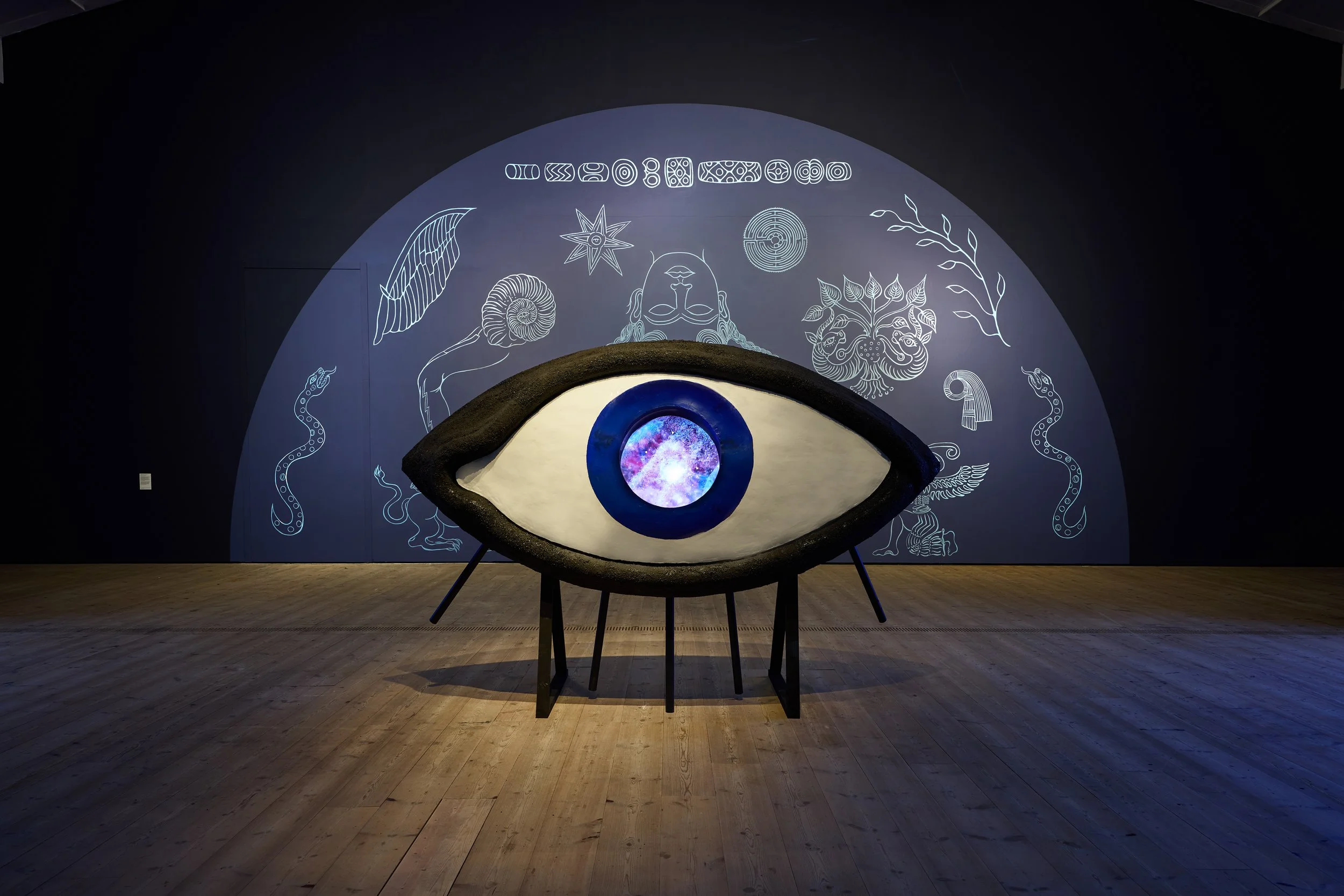
Cosmic Eye, 2026 Ganesh’s sculpture Cosmic Eye is based on a Sumerian eye inlay for a statue (c. 2600- 2500 BCE) held in the collection of The Metropolitan Museum of Art, New York. In ancient Mesopotamian art, wide eyes demonstrate attentiveness and devotion to the gods and also signify a connection between the mortal and godly realms. Lapis lazuli was used to create the striking blue eyes, as well of inlays of shell and black limestone. In Ganesh’s sculpture, the pupil becomes a portal through we are invited to encounter processes of alchemical and cosmic transformation, decay and regeneration.
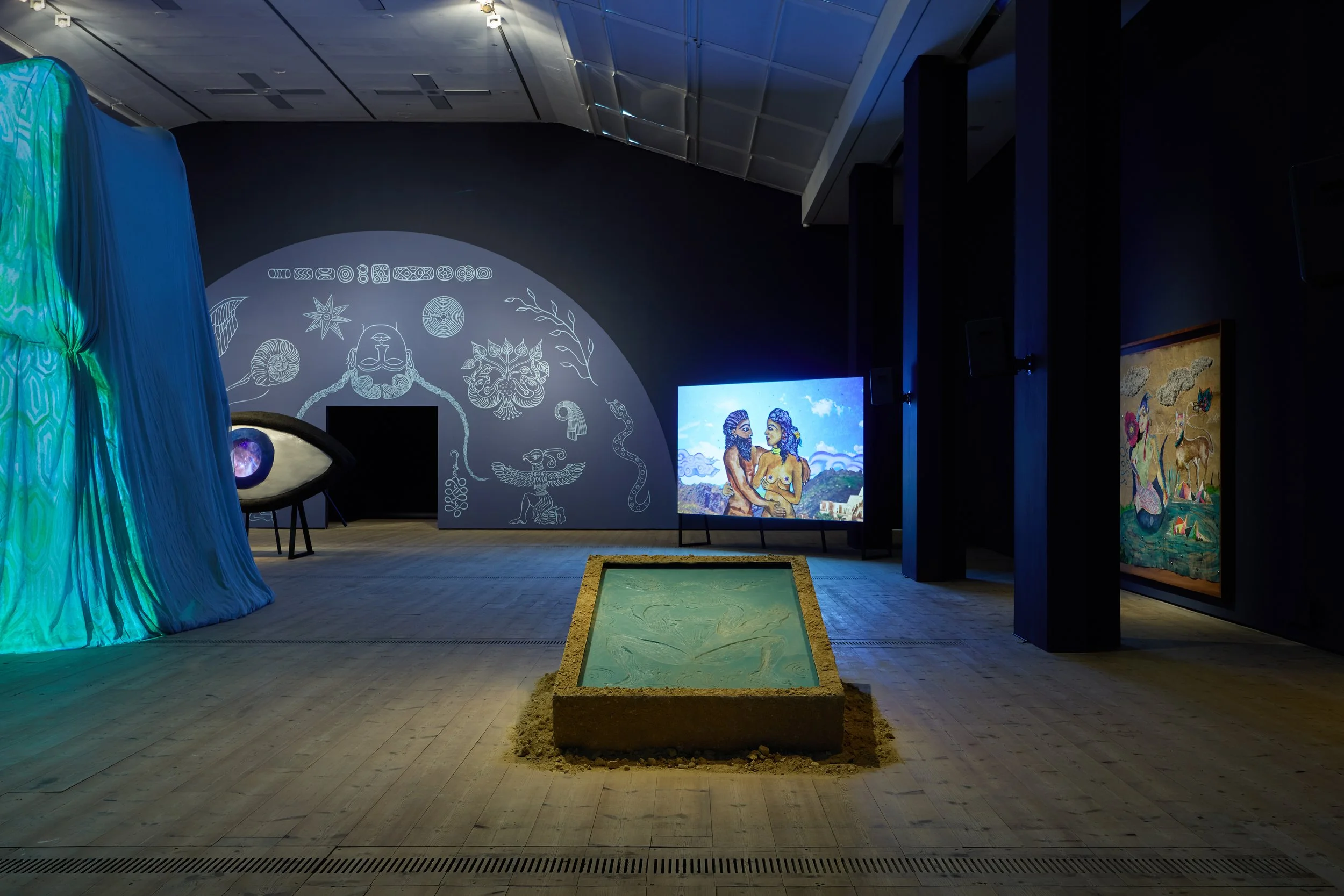
Rebirth, 2026 The sculpture Rebirth is based on a Sumerian cylinder seal. Dating back as early as 3500 BCE, these small cylindrical objects were intricately engraved with religious scenes, mythological narratives, patterns or cuneiform inscriptions, and rolled into wet clay to create an impression. They functioned as personal signatures, administrative tools, and symbols of status. On the wax surface of this enlarged seal, Ganesh has carved an image Ereshkigal, the Mesopotamian goddess of the underworld whose story in the myth of The Descent of Inanna into the Underworld is intertwined with childbirth, death and regeneration. Through the expansion of this ancient object into a monumental form, Rebirth explores cycles of change and the enduring power of myth to reshape our understanding of the human condition.
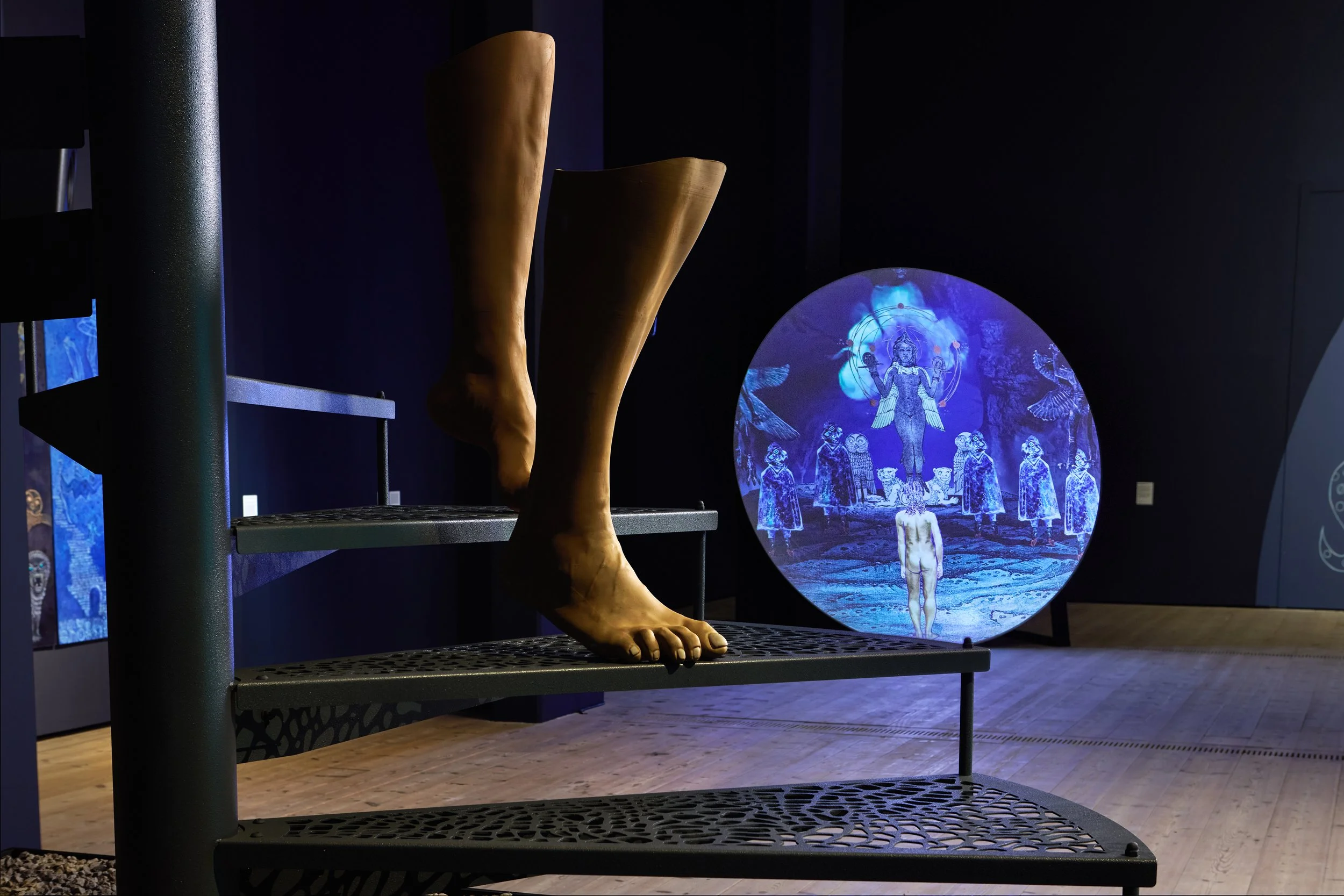
Descent, 2026. In The Descent of Inanna into the Underworld, Inanna descends a staircase as she enters the land of the dead. Ganesh’s interpretation of this passage of the story features an imposing spiral staircase, its monumental proportions evoking ancient statuary. A pair of oversized feet represents the goddess Inanna. The treads of each step are patterned like snakeskin, alluding to the regenerative process of shedding, when snakes and reptiles cast off their outer layers to reveal new forms beneath. Through this imagery, Ganesh draws a parallel between the regenerative power of nature and Inanna’s death, transformation, and rebirth.
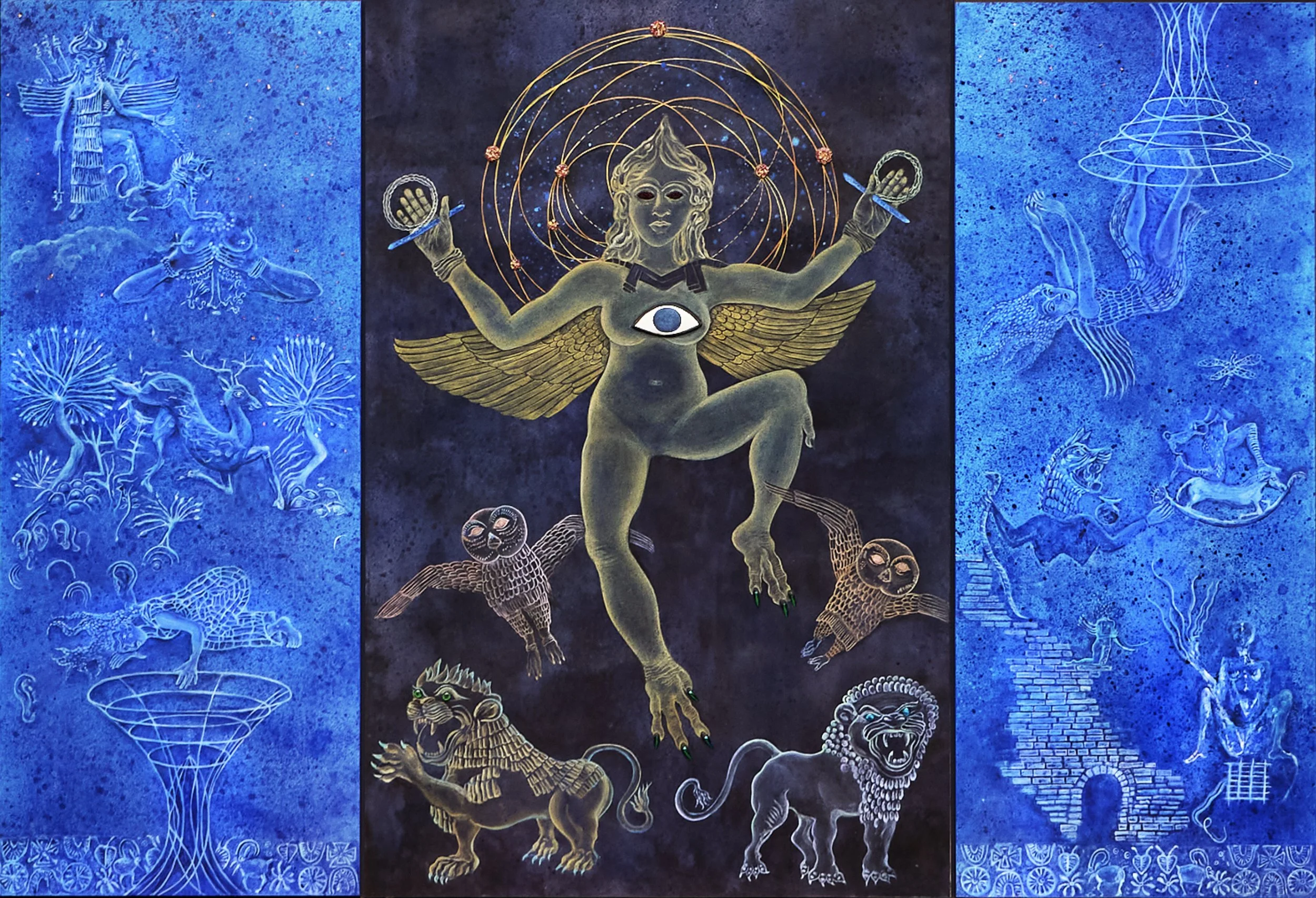
The Great Above and the Great Below, 2026 The centre panel of Ganesh’s triptych is based on the Burney Relief (also known as ‘Queen of the Night’) a fired clay plaque from southern Mesopotamian (c. 1800-1750 BCE) in the collection of the British Museum. Ganesh’s panel features a hybrid female figure (Inanna) with a horned crown and clawed feet, flanked by owls, symbolising death and rebirth, and lions, a symbol of kingship. In her hands she holds a rod and ring, emblems of time and eternity. Ganesh’s distinctive iconography departs from the Burney relief, and she reimagines the central figure as more animated and awakened. The left and right panels depict scenes from Inanna’s journey to the Great Below, using contemporary ways of looking at the past to imagine alternative narratives and possibilities.
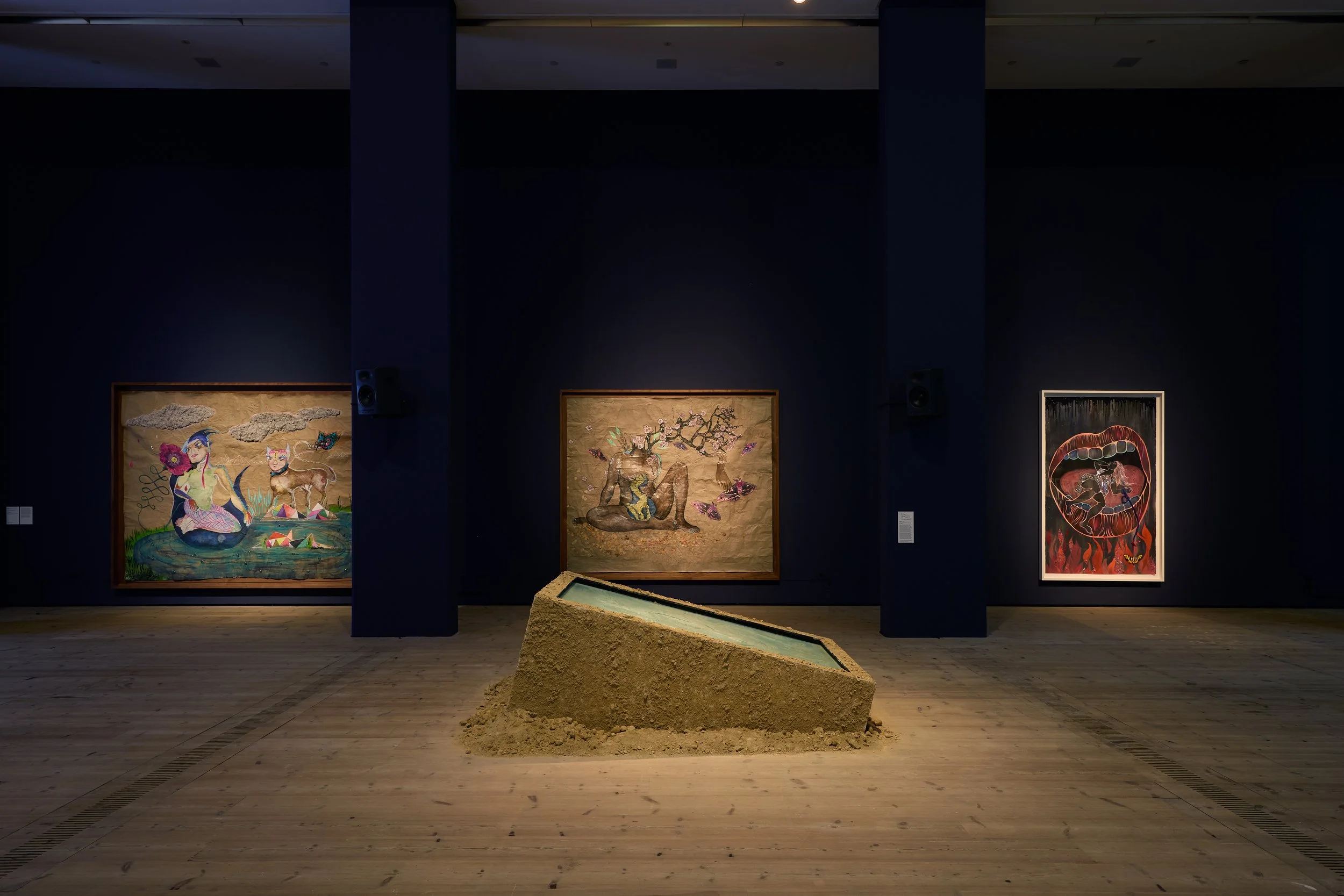
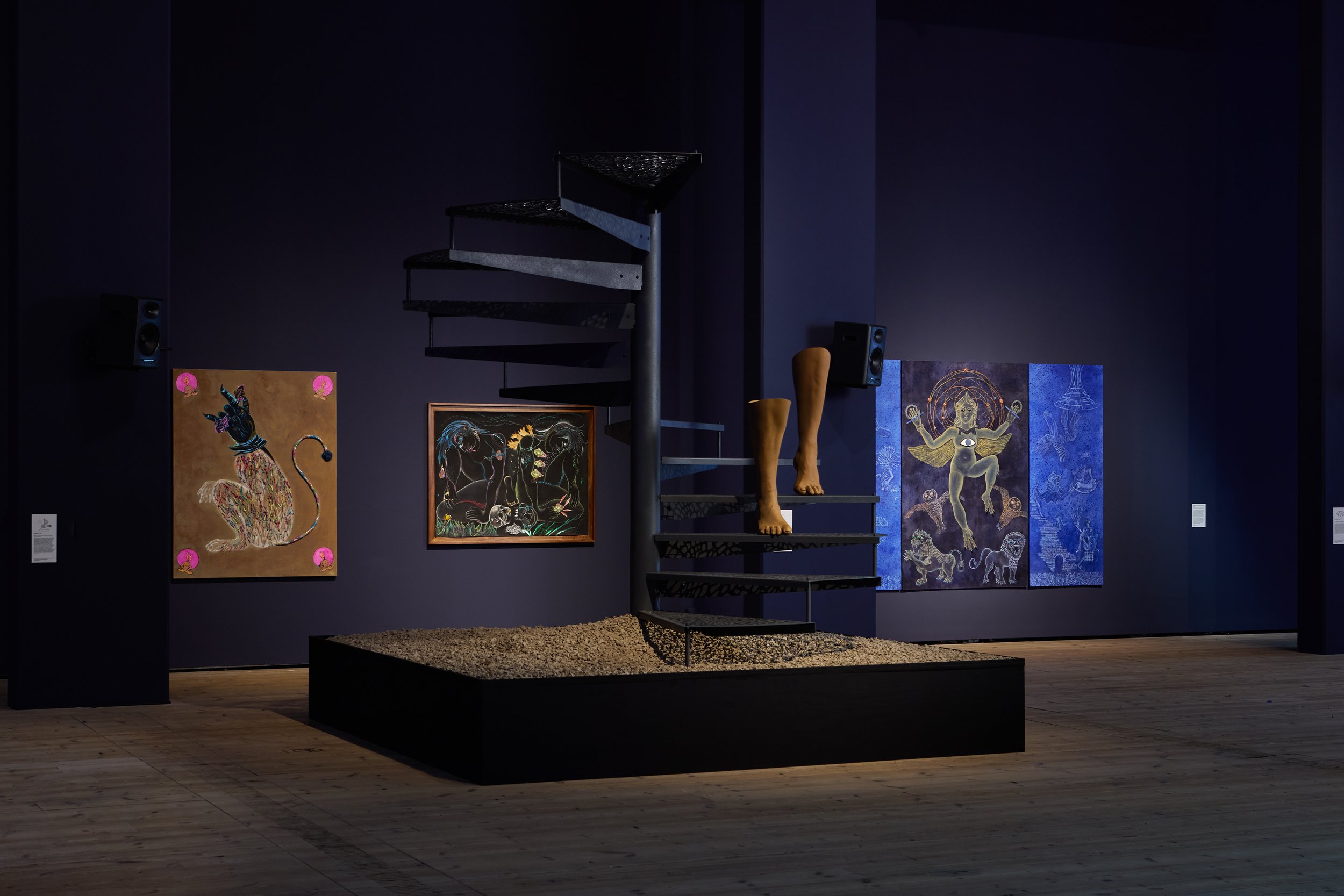

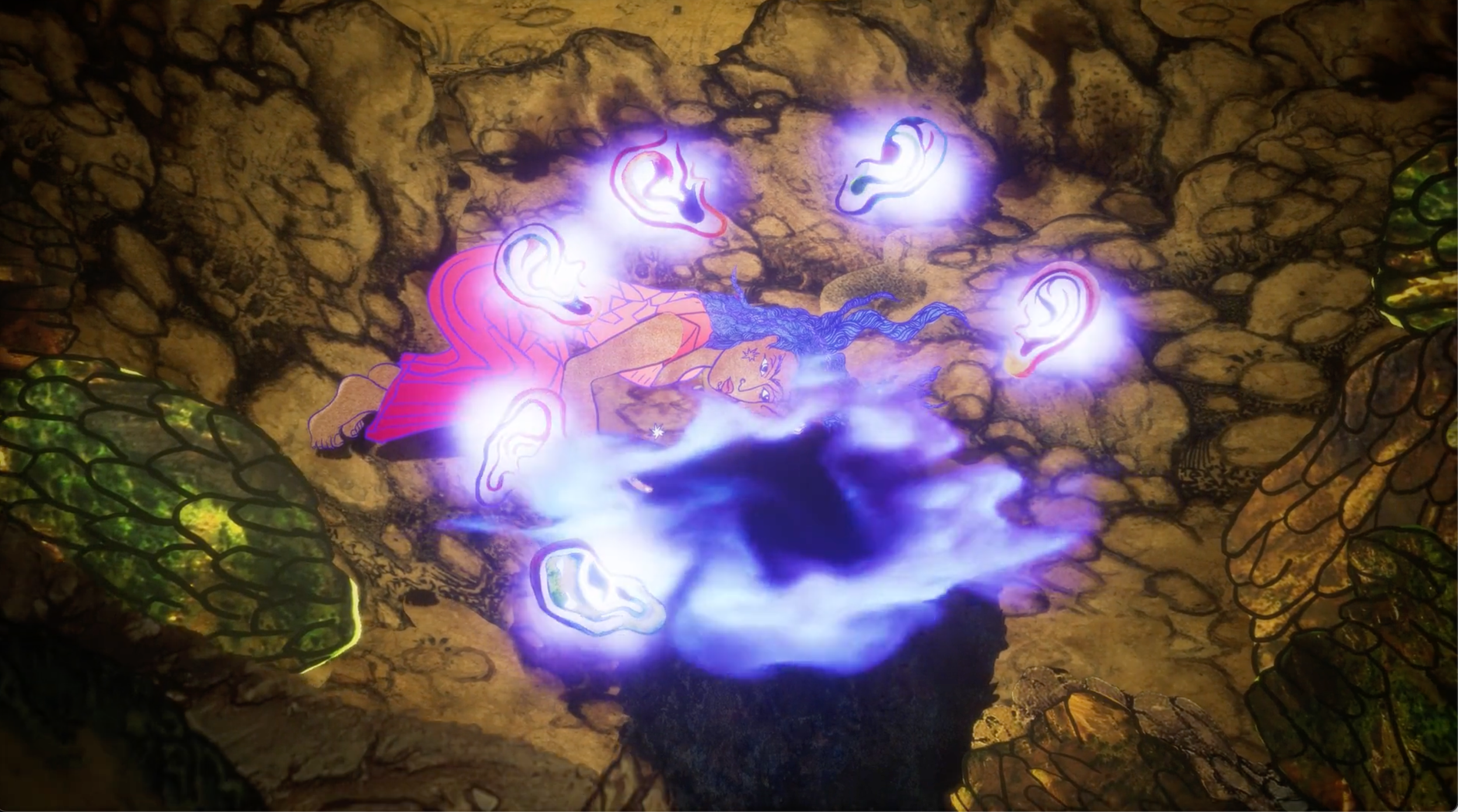
Animation still from Journey to the Great Below 6 minutes 43 seconds, 2026
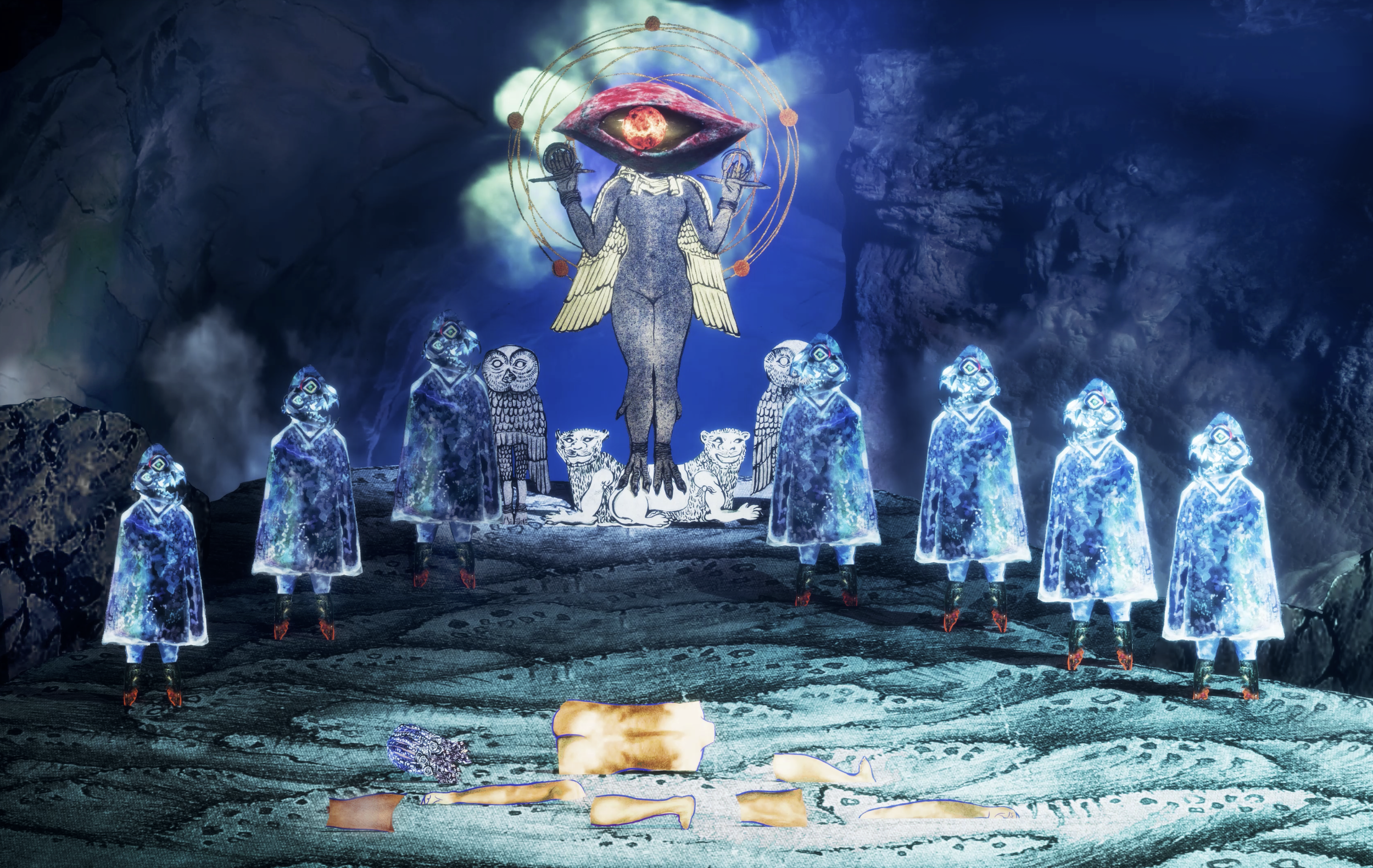
Animation still from Journey to the Great Below 6 minutes 43 seconds, 2026
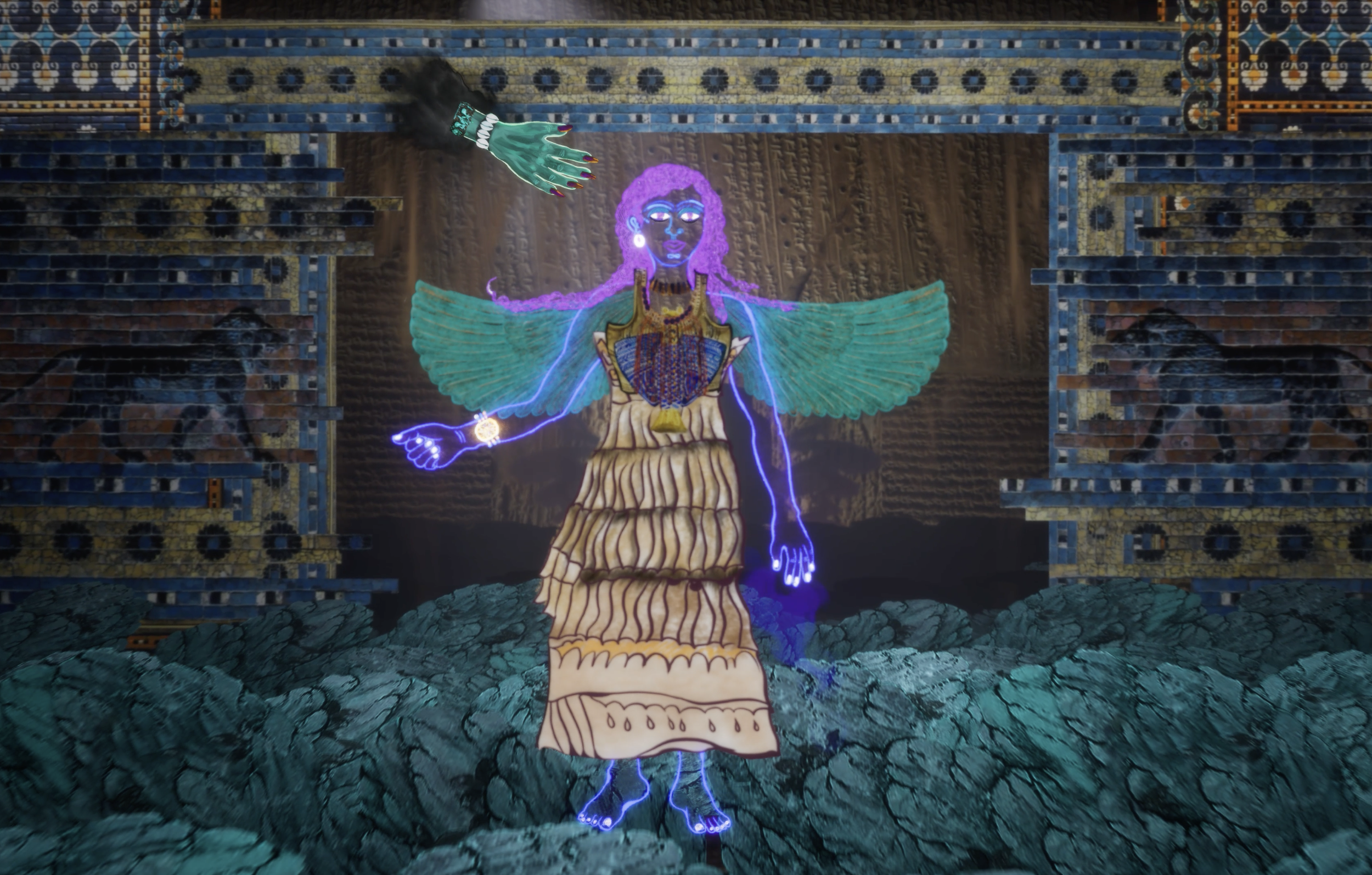
Animation still from Journey to the Great Below 6 minutes 43 seconds, 2026
Excerpt from Journey to the Great Below, 2026. Single channel video, 6 minutes 43 seconds.